


Practical case · Introduction to regulation
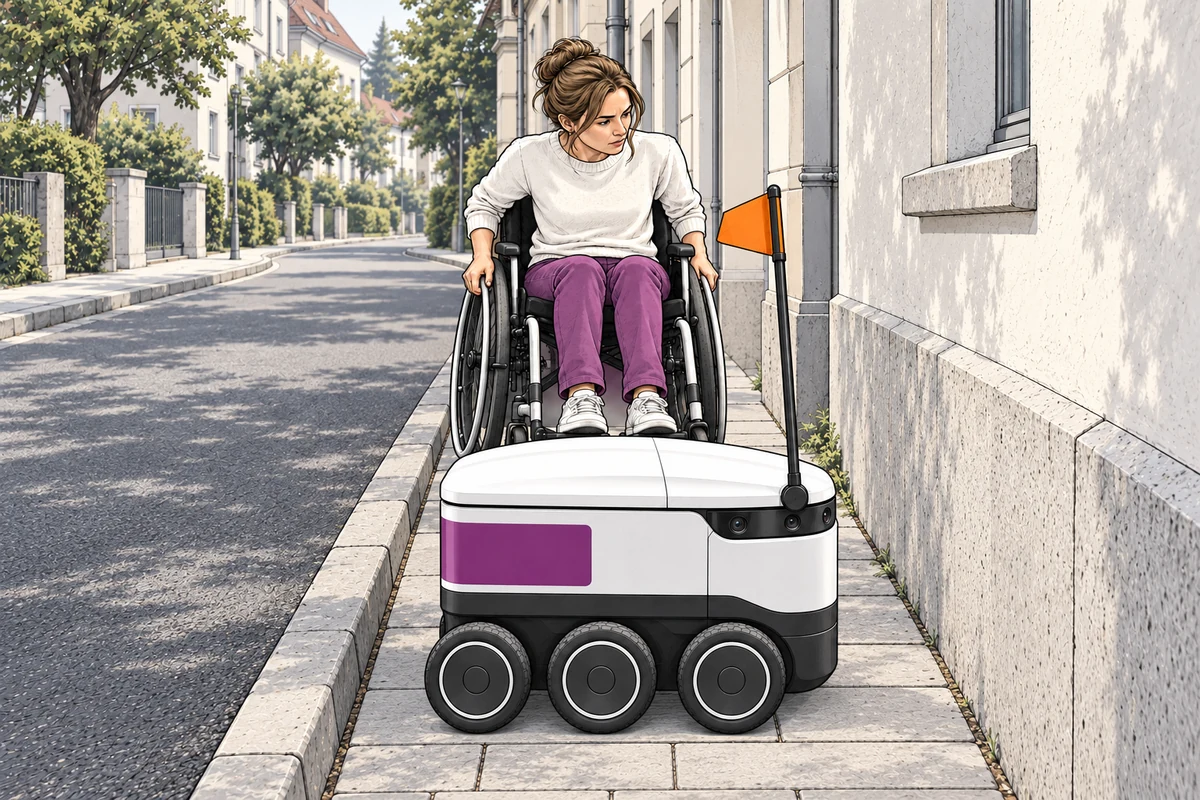
A robot blocks the pavement. How can we find a solution?
First, consider the situation
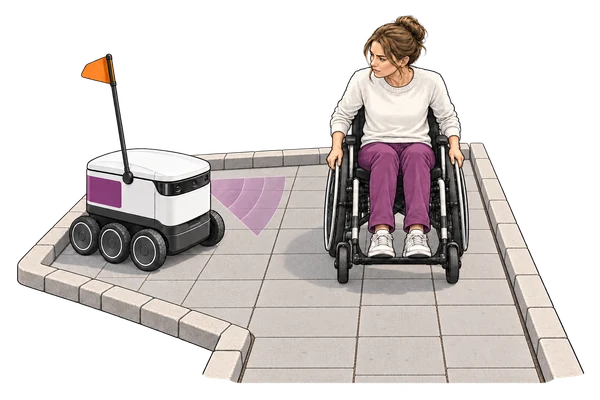
An operator is trialling small delivery robots on pavements. One is waiting for a customer on a narrow section. A wheelchair user cannot safely get past it.
What measure could reduce this problem, and how would it work?
A fictional case for reflection. It does not assess a particular service or the technical capabilities of a real robot.
Try your own proposal
- What exactly is the problem, and who is affected?
- What information is missing before you choose a solution?
- Propose one measure. Explain its effect and identify one drawback.
You can simply think through your answer. Notes are not sent anywhere or saved by this page; copy them before closing it.
The case, five steps and space for notes. The new fact and analysis remain online.
A hint: four ways to influence behaviour
Lawrence Lessig distinguishes law, social norms, the market and architecture. Here, a modality means a way of influencing behaviour. Software code can also shape behaviour involving technology.
The following measures are hypothetical proposals. They show what could be done, not what a particular law already requires.
Law
- How it works
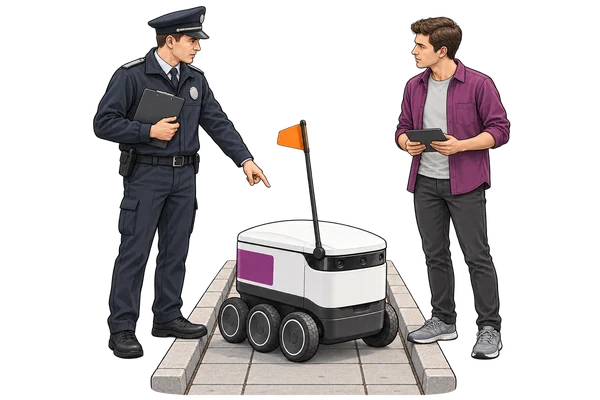
- A duty and the possibility of enforcement.
- A proposal for this case
- Require the operator to keep a passage clear while the robot waits. Specify who checks compliance and the consequences of a breach.
- What could fail
- An unclear duty or weak enforcement may fail to change behaviour.
Social norms
- How it works
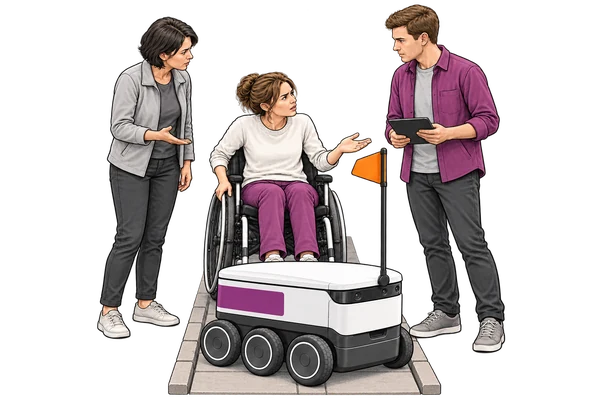
- People’s expectations, approval or disapproval.
- A proposal for this case
- Strengthen the expectation that a delivery service keeps pavements passable. Public disapproval of obstruction may influence the operator’s decisions.
- What could fail
- Social pressure may not act quickly enough. The robot itself does not perceive it as a person would.
Market
- How it works
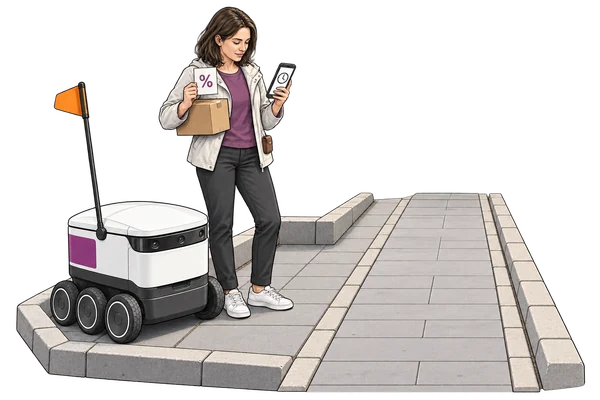
- Prices, costs and economic incentives.
- A proposal for this case
- Offer a discount for collecting the parcel at a suitable collection point outside the passage.
- What could fail
- A discount alone does not ensure that the collection point is accessible to the customer.
Architecture and code
- How it works
- Technical possibilities and constraints.
- A proposal for this case
- Configure the software so that the robot waits only where enough clear space remains for passage. If no such location is available, a predefined fallback should follow.
- What could fail
- Space detection can fail. The fallback must also be feasible on a narrow street.
Measures can complement one another. A legal duty may lead to a software change. What matters is how a measure works, not just its label.
Reveal a new fact
New information about the customer
The customer receiving the parcel has reduced mobility. If you move the robot to a more distant collection point, the customer cannot collect the parcel.
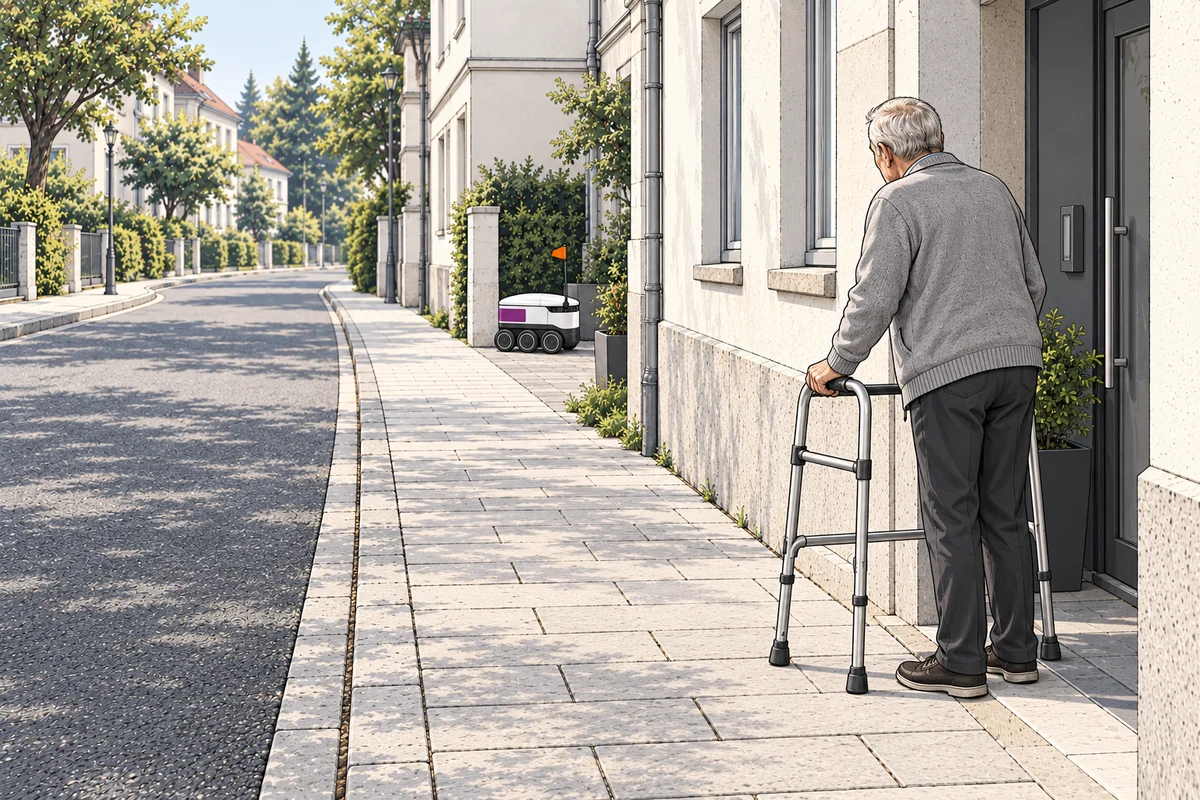
Does your proposal still work? Adapt it so that the pavement remains passable and the customer can actually receive the parcel. If you propose human assistance, specify who provides it, how it is requested and who pays for it.
Compare with the analysis
We check the solution from two perspectives: can people pass along the pavement, and can the customer receive the parcel?
Moving the robot may help passers-by while making delivery inaccessible. Several solutions may be defensible. Each still needs an explanation of its effect, the conditions under which it works and its drawbacks.
Five steps from a problem to a recommendation
Problem
What is happening, who is affected and what is the goal?
The robot prevents safe passage. The goal is both a passable pavement and accessible delivery. Passers-by, the customer and the operator are affected.
Information
What do we know, what are we assuming and what is missing?
We need the pavement width, the duration and frequency of obstruction, the robot’s capabilities and the customer’s needs. We check the device’s legal classification and applicable rules, including when they take effect. The customer’s ability to move to another location was only an assumption.
Measures
What do we propose, and how will it help?
One possible combination is an operator duty to keep a passage clear and software that selects a suitable waiting location. If that location is inaccessible to the customer, the operator arranges an agreed handover method or assistance. This is a proposed combination of law and architecture, not a quotation of an existing duty.
Consequences
Whom does the proposal help, what does it cost and where could it fail?
Obstruction may decrease, but delivery times and costs may rise. Unreliable sensing or unavailable assistance can undermine the solution. Costs and work should not silently be shifted to the wheelchair user or a random passer-by.
Recommendation
Why choose this proposal, and how will we check the outcome?
Before expanding the service, evaluate the combined measure in representative situations. Track clear passage, successful receipt of parcels, the response time and availability of assistance, and costs. Adapt the measure in light of the results.
The five steps are a teaching approach used in this case. Lessig’s model identifies the four modalities of regulation, not these five steps.
One way to formulate the recommendation
I propose that the robot wait only where a safe passage remains and the customer can receive the parcel. If no such location is available, the operator will arrange and fund agreed assistance with handover. The proposal may increase costs and delivery times; we will evaluate how it works for both passers-by and customers with reduced mobility.
This example assumes that the operator can actually provide assistance. If it cannot, the delivery method must change or operation at that location must be restricted. Merely mentioning “assistance” does not complete the solution.
Takeaway: a good measure has an explained effect, an identified drawback and a way to check whether it works.
Final reflection
Which assumption in your first proposal did you have to reconsider after the new information?
If your proposal still held up, explain why the new information did not change it.